Why Your Exterior Coating in Chicagoland Is Only as Good as What Goes on First
Category
When exterior paint fails on a Chicagoland home, the conversation usually focuses on the topcoat — the wrong brand, too few coats, poor quality product. That’s understandable. The topcoat is what you see, so it’s natural to assume that’s where the problem started.
It usually didn’t. Most exterior coating failures originate at the bond between the coating and the surface beneath it — not at the surface of the paint itself. And the thing that determines whether that bond holds through a Chicago freeze-thaw cycle, a humid August, and another winter after that is something most homeowners never see and most painters don’t spend much time explaining: the primer.
This is the part of the Rhino Shield system that we think deserves more attention. Not because it’s the most visible step — it isn’t — but because it’s the step that makes everything that comes after it possible.
What Primer Actually Does (And Why Most Explanations Stop Short)
The standard answer to “why does primer matter?” is that it helps paint stick. That’s true, but it undersells what’s actually happening at the surface level and why it matters so much more on an exterior application than an interior one.
A primer is a bonding intermediary. It penetrates the substrate — wood, stucco, masonry, cement board, metal — and creates a chemically stable foundation that both grips the surface beneath it and presents a consistent, receptive layer for the topcoat above. inPAINT magazine, a trade publication for professional painting contractors, describes it this way: the primer acts like peanut butter in a sandwich, adhering simultaneously to the base layer and the coating, staying flexible enough that the topcoat has something real to grip. Without it, you’re asking the topcoat to adhere directly to whatever condition the substrate happens to be in — old paint, bare wood, weathered stucco — and hoping it holds.
On interior walls, you can get away with less. The stakes are lower: temperature and humidity variation is limited, there’s no UV exposure, and if it peels in four years you repaint and move on. On a Chicagoland exterior, those stakes change entirely.
Why Chicago’s Climate Makes the Primer Step Critical
The Chicagoland area subjects exterior coatings to some of the most demanding conditions in North America. Temperatures that swing 100 degrees or more between summer highs and winter lows. Freeze-thaw cycles that can happen dozens of times in a single winter season, each one expanding and contracting the substrate. Summer humidity that drives moisture into every unsealed pore. Lake-effect weather that delivers wind, rain, and temperature swings with very little warning.
Every one of those stressors attacks the weakest point in an exterior coating system — and the weakest point is always the bond line. If the primer didn’t penetrate the substrate properly, or if it was applied only over bare spots while old, compromised paint remained beneath the rest of the surface, the topcoat has uneven adhesion from day one. Some sections are well-bonded; others are essentially floating. When the substrate moves — and in Chicago’s climate, it always moves — those floating sections begin to fail.
This is why cutting corners on primer shows up so predictably within a few years on Chicago-area homes. The topcoat might look fine for a season or two. But the failure was built in from the start.
The Rhino Shield Primer System: Engineered for the Substrate, Not Generic
One of the things that distinguishes the Rhino Shield primer system
is that it isn’t one product applied universally. There are four distinct primer formulations, each designed for specific substrate types:
- Adhesive Primer — a proprietary primer sealer that penetrates the surface and dries to form a watertight membrane, becoming part of the substrate itself rather than sitting on top of it. This is the core primer for most residential wood and previously painted surfaces.
- Elastomeric Primer — for surfaces that require additional flexibility in the bond layer, allowing the coating system to accommodate higher levels of substrate movement without cracking at the interface.
- Cement Board Primer (CBP) — a waterborne, latex-based formula with high resin content, engineered specifically for the porous, alkaline surfaces of cement board siding, stucco, and masonry block. These surfaces demand a primer that can penetrate deeply and neutralize alkalinity that would otherwise degrade the topcoat bond over time.
- Red Oxide Metal Primer — a water-based direct-to-metal rust inhibitor for metal substrates. More environmentally responsible than traditional red iron oxide formulations, it creates a corrosion-resistant foundation before the ceramic topcoat is applied.
Matching the primer to the substrate isn’t a refinement — it’s a requirement. A primer formulated for wood doesn’t behave the same way on stucco. A primer designed for a smooth previously-painted surface won’t penetrate a porous masonry block the way the CBP will. Using the right primer for the right surface is part of how the system performs consistently across the wide variety of home types and exterior materials we see across Cook, DuPage, Lake, and Kane counties.
Full-Surface Priming: The Step That Most Contractors Skip
Even contractors who use a quality primer often apply it only to bare patches — the sections where old paint was scraped away, where wood was sanded back, where repairs were made. The rest of the surface gets the topcoat applied directly over old paint or existing substrate.
The problem with that approach is consistency. When the ceramic topcoat goes over fresh primer in one area and directly over old paint in another, those two sections don’t bond the same way. They don’t cure the same way. They don’t respond to temperature and moisture stress the same way. Over time, the differences show up as uneven adhesion, inconsistent sheen, and localized failure that starts at the seams between primed and unprimed sections.
As part of Rhino Shield’s 11-step application process, the primer goes on the entire surface — every square foot of the project area — before the ceramic topcoat is applied. Not just the bare spots. Not just the problem areas. Everything. The result is a uniform bonding foundation across the whole home, so the topcoat adheres consistently and performs consistently from day one through year twenty-five.
How the Primer Connects to Everything That Comes After It
The Rhino Shield system is a 100% acrylic elastomeric and urethane resin formula loaded with ceramic microspheres, applied at 8 to 10 times the thickness of conventional paint, with 67% solids by volume compared to the 40% or less typical of standard exterior latex. It reflects more than 90% of UV radiation. It breathes at 64 perms — better than any other exterior coating on the market — so moisture vapor escapes rather than accumulating beneath the surface. It carries a 25-year transferable warranty against peeling and flaking.
None of those properties do what they’re supposed to do if the topcoat isn’t properly bonded to the substrate. The ceramic microspheres don’t protect against moisture infiltration if water is getting in at the bond line. The elastomeric flexibility doesn’t prevent cracking if the coating is delaminating from below. The UV reflectance doesn’t prevent long-term degradation if adhesion failure is already underway.
The primer is the foundation of all of it. It’s the reason the topcoat can make the promises it makes.
“We love Rhino Shield! They do an incredible job with an incredible product…We’ve had the product on our home for over 10 years and it looks just as good as it did the day they applied!”
Why the Warranty Requires It
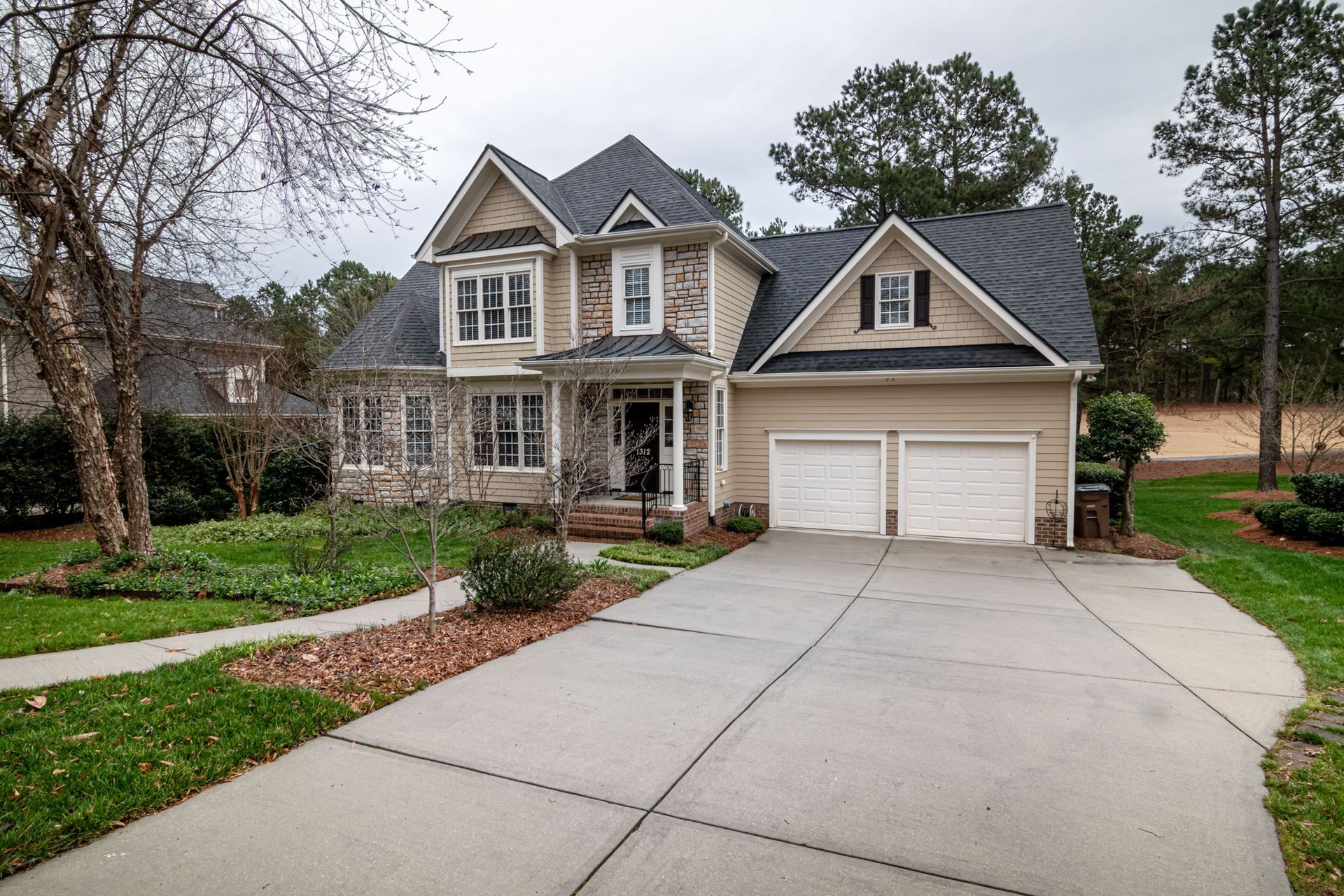
The 25-year warranty isn’t issued for applying a ceramic topcoat. It’s issued for applying the complete Rhino Shield system — which begins with the right primer for the right substrate, applied to a properly prepared surface, at the appropriate coverage rate, before the topcoat goes on.
That’s not a technicality designed to get out of warranty claims. It reflects the reality of how exterior coating systems actually perform. A ceramic topcoat applied over inadequate primer on a compromised surface won’t last 25 years regardless of how good the topcoat chemistry is. The system works when every step is executed correctly. The primer is step one of the coating application — and it has to be right before anything else matters.
If you’d like to understand exactly what the process would look like on your home — what primer would be used, what the prep involves, and what the coating system is specified for your specific substrates and exposures — we’re glad to walk through it. Free estimate, no obligation.
(630) 984-4440 | Request an estimate online
The post Why Your Exterior Coating in Chicagoland Is Only as Good as What Goes on First appeared first on Rhino Shield of Chicagoland.