Can You Paint Vinyl Siding in Chicago? Yes — But Not With Regular Paint
Category
Short answer: yes, you can paint vinyl siding. But vinyl carries two constraints no other siding has. The coating has to stretch with panels that move roughly half an inch across a 12-foot run, and the finished color can't absorb so much heat that the vinyl distorts. Standard exterior latex fails both tests, which is why so much painted vinyl in Chicagoland looks rough after three or four winters.
Homeowners usually ask this question at a specific moment. The siding is 20-odd years old, it's gone chalky and faded, and a siding contractor has just quoted a tear-off. Replacement is one answer. It isn't the only one — but the coating has to be right, and most of them aren't.
Why Vinyl Is Harder to Coat Than Wood or Fiber Cement
Wood siding is nailed tight to the sheathing. Vinyl isn't. It's hung on nails driven into slotted holes and left deliberately loose, because the material has to slide as it heats and cools. That single design detail causes most of the coating failures we see.
Consider what a Chicagoland exterior actually goes through. A January night at minus ten, a July afternoon at ninety-five in direct sun, and a south-facing wall that runs hotter than the air temperature. That's a swing north of a hundred degrees, and vinyl moves through all of it. A twelve-foot panel can gain and lose close to half an inch of length over a year.
Conventional exterior latex dries to a hard, comparatively brittle film. Stretch it a few thousand times at the panel laps and locks and it does exactly what you'd expect: hairline cracks first, then lifting at the edges, then sheets. Homeowners tend to blame the prep. Usually the prep was fine and the product was wrong.
The Color Problem Nobody Mentions at the Estimate
The second constraint is heat. Dark colors absorb more solar energy and pass it into the substrate, and vinyl that expands far enough stops coming back. Sherwin-Williams puts it plainly in its technical guidance on what causes vinyl siding to warp: "When vinyl siding expands dramatically, it is not able to contract to its original dimensions." Their recommendation is to stay "no darker than the original color of the siding."
This is the part that gets skipped. A homeowner picks a deep charcoal off a fan deck in a showroom, nobody raises the substrate, and two summers later the south elevation has a wave in it that no amount of repainting will flatten. The panels have to come off.
Color selection on vinyl isn't a preference conversation. It's a specification, and it belongs in the estimate, not in the color appointment afterward.
Chalking: The Prep Step That Decides Everything
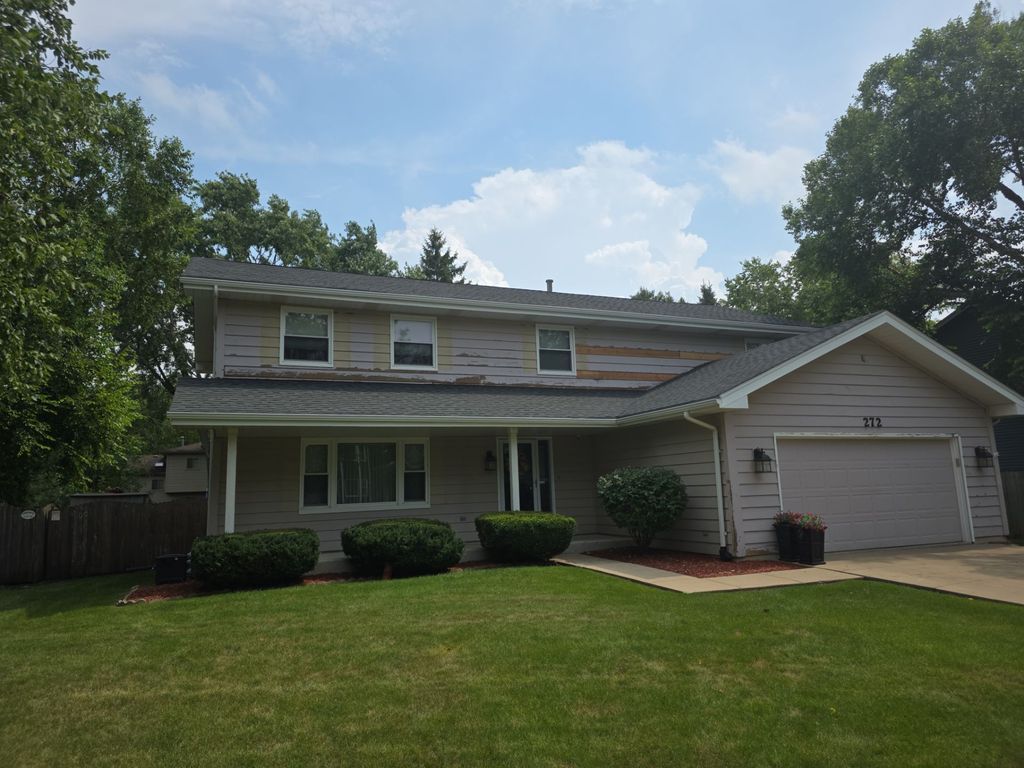
Run your hand down a twenty-year-old vinyl wall and you'll come away with white powder. That's oxidation — the surface of the vinyl breaking down under UV exposure. It's normal, and it's also a release layer.
Any coating applied over that powder bonds to the powder, not to the panel. It'll look perfect on the day the crew leaves. It'll fail from the top down as the chalk continues to shed underneath. Removing it takes more than a rinse: it takes a proper wash with the right detergent, worked into the surface, and then verified by hand before anything else touches the wall.
We've written before about what goes wrong with vinyl siding over time — oxidation is the first stage, and it's the one that determines whether a coating has anything solid to grab.
What Actually Works on Chicago Vinyl
Three properties, in this order.
- Elongation. The coating has to stretch and recover, repeatedly, across that hundred-degree range. An elastomeric film moves with the panel. A rigid film argues with it and loses.
- Film build. Aging vinyl isn't a smooth surface at a microscopic level, and a thin film sits in the valleys rather than bridging them. The Rhino Shield ceramic topcoat goes on at eight to ten times the thickness of conventional paint, at 67% solids by volume, which is what allows it to form a continuous membrane over a surface that's no longer flat.
- Heat reflectance. Reflecting UV rather than absorbing it reduces how much energy reaches the vinyl in the first place. The ceramic topcoat reflects more than 90% of UV radiation — which mitigates the heat load but does not erase it, so color still gets specified against the original siding.
It's also a multi-coat system, not a single pass. Primer selected for the substrate, then the ceramic topcoat in multiple coats. That's what produces the film thickness the numbers above describe.
The full specification for vinyl, including how we assess oxidation and panel condition before quoting, is on our vinyl exterior coating page.
Coating vs. Replacing: How to Think About It
Coating isn't the right call in every case. If panels are cracked, brittle, or hail-damaged, or if there's moisture trouble in the wall behind them, replacement is the honest recommendation and we'll say so.
But if the vinyl is structurally sound and simply looks tired — faded, chalky, a color nobody's chosen since 2003 — then a tear-off replaces a functional wall to solve a cosmetic problem. Coating solves the cosmetic problem, ends the 5-to-7-year repaint cycle that standard paint would put you back into, and comes with a 25-year transferable warranty.
Worth knowing: painting vinyl will generally void whatever's left of the siding manufacturer's finish warranty. On twenty-year-old panels that warranty has usually expired or prorated down to almost nothing, which is exactly why coating tends to come up on older siding and rarely on new.
Questions Worth Asking Any Contractor
If you're getting quotes from companies that paint vinyl siding around Chicagoland, four questions sort the field quickly:
- How do you test that the chalking is off before you coat?
- What's the elongation rating of the product you're putting on my house?
- Is the color I picked lighter than my existing siding, and if not, what changes?
- What happens at the panel laps, where the movement concentrates?
Vague answers on any of those usually mean vinyl is being treated as one more surface on the estimate rather than the specific problem it is.
Happy to walk your siding with you and give you a straight read on whether coating or replacement makes more sense — free estimate, no obligation.
(630) 984-4440 | Request an estimate online