Why Stucco Exterior Painting in Chicagoland Demands a Different Approach

Kaspars Melderis • May 12, 2026

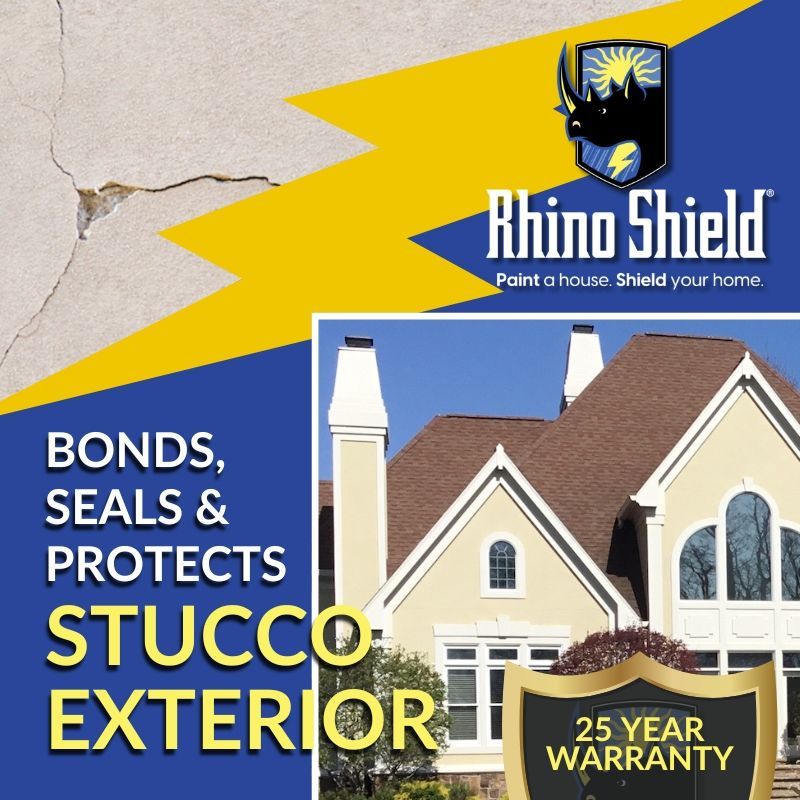
stucco exterior paint coatings Stucco exteriors are common across Chicagoland — from older traditional three-coat systems on homes built before the 1970s to synthetic EIFS installations on 1990s construction in the suburbs. The material looks similar across generations, but it presents a set of coating challenges that separate experienced stucco exterior painters from those who treat it like any other surface.
The problems that appear on painted stucco in Chicago — blistering, cracking along hairlines, delamination after the first winter — almost always trace back to prep shortcuts or product choices that didn’t account for what stucco actually is and how it behaves. Here’s what a proper stucco coating in Chicagoland requires, and what distinguishes a contractor who understands this surface from one who doesn’t.

What Makes Stucco Uniquely Demanding

Three properties of stucco create challenges that standard painting approaches handle poorly:

Coverage Is Half of What Painters Expect

Stucco’s texture dramatically increases the actual surface area being coated.  Bob Vila’s stucco painting guide  puts it plainly: a gallon of paint rated for 400 square feet on a smooth surface covers about 200 square feet on stucco. Contractors who estimate material needs without adjusting for stucco texture are underspecifying from the start. Thin application means low points in the texture don’t get full coverage, the coating fails to penetrate the surface properly, and the result fades, chalks, and fails well ahead of schedule.

Alkalinity Degrades Standard Primers

Like brick and fiber cement, stucco has an alkaline surface chemistry. Standard exterior paint primers aren’t formulated for sustained alkaline exposure — the pH environment breaks down the primer’s binder chemistry over time, undermining adhesion before the topcoat shows any visible failure. Acrylic chemistry is specifically recommended for stucco because it handles the surface’s alkaline properties better and provides the breathability the surface needs. A primer matched to the substrate chemistry isn’t a refinement — it’s the foundation everything else depends on.

Cracks Are Inevitable in Chicago’s Climate

Stucco cracks. It’s not a question of if but of when and where. The freeze-thaw cycling that Chicago averages more than 100 times per year is particularly aggressive on stucco because the material is rigid — it doesn’t flex with temperature-driven expansion and contraction the way a properly formulated elastomeric coating does. Hairline cracks are normal. The question is whether the coating applied over the stucco can bridge those hairlines and seal them against water infiltration, or whether it cracks along with the stucco and opens a path for water to get underneath.

The Crack-and-Water Failure Sequence

Stucco’s biggest threat in Chicago isn’t cosmetic — it’s water. When a coating cracks along hairlines and allows water infiltration, the sequence that follows is expensive. Water enters the crack, gets behind the stucco, reaches the substrate or the building’s framing, and begins doing damage that a fresh coat of paint over the original crack cannot reverse. In winter, that water freezes, expands the crack further, and accelerates the deterioration. By the time visible water damage appears on the interior, the exterior has often been compromised for years.

This is why the elastomeric property of a stucco coating is not optional in a Chicago climate — it’s the specific characteristic that determines whether a coating stays ahead of hairline crack formation or fails along with it. A rigid paint film on a surface that moves is a failure in progress from day one.

Prep: Where Most Stucco Coating Jobs Are Won or Lost

Before any primer goes on stucco, the surface condition has to be fully assessed. Cracks wider than hairlines need to be filled with stucco patching compound — and that compound needs to cure completely, which can take up to 10 days before it’s ready to coat. Painting over incompletely cured patches is a common shortcut with predictable results: the patch continues curing under the paint, moisture works in, and the repair fails within a season.

Active water infiltration points need to be identified and addressed before coating. On older stucco, this includes checking the condition of caulk at all window and door perimeters, at utility penetrations, and at any transition where stucco meets another material. On EIFS (synthetic stucco), moisture assessment is especially important — older EIFS installations have well-documented moisture infiltration vulnerabilities at penetrations, and a coating applied over water-compromised EIFS doesn’t solve the problem underneath.

The surface also needs to be genuinely clean. Stucco’s texture holds dust, mildew, algae, and chalk from failing previous coatings in ways that smooth surfaces don’t. Pressure washing has to be thorough and complete — residue left in the low points of the texture prevents proper primer adhesion in exactly the areas where the coating needs to penetrate deepest.

The Rhino Shield Approach to Stucco

For stucco surfaces, Rhino Shield uses a Cement Board Primer — a waterborne, high-resin latex formula engineered for porous, alkaline masonry and cement surfaces. It penetrates the stucco deeply, handles the alkaline chemistry without degrading, and creates a consistent bonding layer across the full surface area before the ceramic topcoat is applied.

The ceramic elastomeric topcoat applies at 8 to 10 times the thickness of conventional paint, which serves two functions on stucco: it fills and bridges hairline cracks that would allow water infiltration under a thinner coating, and it covers the texture fully — delivering complete coverage into every nook of the stucco surface rather than leaving low points undercoated. At 67% solids by volume and breathability of 64 perms, it seals against liquid water while allowing moisture vapor to escape — the correct behavior on a masonry surface that needs to breathe.

The 25-year transferable warranty covers the system on stucco just as it does on other substrates — because the prep process and product chemistry are designed to handle what stucco does in a Chicago climate, not to assume it will behave like a painted wood wall.

Learn more about  how Rhino Shield performs on stucco exteriors  across Cook, DuPage, Lake, and Kane counties.

If you have a stucco exterior and want to understand what the right assessment and process would look like on your home — free estimate, no obligation.

(630) 984-4440   |   Request an estimate online

Redfin Blog logo with red and black text on a white background
By Kaspars Melderis June 30, 2026
If you’re planning a home improvement project this year and wondering where to put your money, a new guide from Redfin has an answer — and it starts with your exterior. Redfin’s recent roundup of the most valuable home remodeling projects in Chicago put exterior durability front and center, and Rhino Shield of Chicagoland was featured among […] The post Why Exterior Coating Is One of the Smartest Home Investments You Can Make in Chicago appeared first on Rhino Shield of Chicagoland.
Person on a ladder painting the exterior siding of a house with a roller.
By Kaspars Melderis June 15, 2026
Chicago has no shortage of exterior painters. On any given weekend in spring or summer, you can find a dozen flyers on telephone poles, five quotes in your inbox after a single Angi search, and at least one neighbor who knows a guy. The hard part isn’t finding someone who’ll paint your house — it’s […] The post Exterior Painters Chicago: What Separates a Great Hire From a Costly Mistake appeared first on Rhino Shield of Chicagoland.
Blue house with autumn trees and fallen leaves, viewed from the front yard
By Kaspars Melderis June 12, 2026
If you own a wood-sided home in the Chicago area, you already know the cycle. Paint the house, it looks great for a season or two, and then the cracks start. Peeling follows. By year four or five, you’re staring down another repaint — or worse, soft boards that need replacing before you can even […] The post Wood Exterior Paint Coating: Why Standard Paint Keeps Failing — And What Actually Works appeared first on Rhino Shield of Chicagoland.
Show More