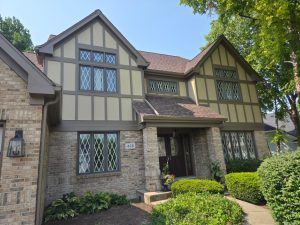
 Wood siding looks incredible when it’s right. There’s a warmth and character to it that no other exterior material quite matches — which is probably why so many DuPage County homes were built with it. But anyone who has owned a wood-sided home for more than a decade knows the other side of that story: the bubbling paint, the soft spots that give when you press on them, the contractor who shows up every few years to go through the same cycle all over again.The problem isn’t the wood. It’s what most people put on top of it.
Why Wood Is the Hardest Exterior Surface to Protect
Wood is a porous, organic material. It breathes — absorbing moisture when the air is humid and releasing it when conditions dry out. Through an Illinois year, that cycle happens hundreds of times. Summer humidity causes wood to swell. Winter cold and furnace-dry indoor air cause it to contract. Spring thaws bring water into gaps that opened over the winter.
Traditional exterior paint is a rigid film. It sits on the surface of the wood rather than bonding into it, and it has very little flexibility. When the wood moves — and it always moves — the paint can’t keep pace. The result is cracking and peeling, often starting within a few years on the most exposed surfaces. Once the film breaks, moisture gets underneath, and the real damage begins: wood rot, mold, and structural deterioration that no amount of paint can fix.
It’s not a new problem. The USDA Forest Products Laboratory’s technical guide Finishing Wood (FPL-GTR-282) — a 36-page reference used by wood science professionals — states it plainly: protection from water is the most important function of any exterior wood finish, and controlling moisture is the decisive factor in how long that finish lasts. When a coating traps moisture rather than allowing the wood to breathe, failure isn’t a possibility — it’s a timeline.
This isn’t a knock on painters who do good work. It’s a material science problem. Standard paint simply wasn’t designed to solve it long-term.
What’s Different About a Ceramic Exterior Coating on Wood
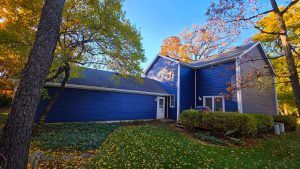 Rhino Shield’s ceramic exterior coating approaches wood protection from a completely different angle. Rather than forming a rigid surface film, the ceramic formula is breathable
— it bonds to the wood substrate while still allowing moisture vapor to pass through rather than accumulating beneath the surface.
Rhino Shield’s ceramic exterior coating approaches wood protection from a completely different angle. Rather than forming a rigid surface film, the ceramic formula is breathable
— it bonds to the wood substrate while still allowing moisture vapor to pass through rather than accumulating beneath the surface.
That distinction matters more than almost any other specification. A breathable coating works with the wood’s natural behavior instead of against it. Moisture still moves through the material the way it should, but it doesn’t get trapped in a pocket between the wood and a sealed coating layer.
Beyond breathability, the ceramic formula:
- Reflects UV radiation — reducing the heat absorption that accelerates paint degradation, especially on south- and west-facing walls common in Naperville and Wheaton neighborhoods
- Resists mold, mildew, and algae growth — a real problem in shaded areas and on homes near mature tree canopy, which is nearly every home in Glen Ellyn and Lisle
- Applies at a higher mil thickness than conventional paint — meaning more actual material on the surface, creating a more durable barrier against weather
- Bonds rather than films — the ceramic coating doesn’t just coat the surface; it penetrates and adheres to the wood grain, which is why it stays put when the wood expands and contracts
The result is a wood exterior that looks freshly painted — and stays that way for decades, not years. Learn more about how the Rhino Shield ceramic coating performs on cedar and wood surfaces.
Preparation Is 90% of the Job — Here’s What That Actually Looks Like
The best coating in the world fails on a surface that wasn’t properly prepared. This is where a lot of contractors — even well-intentioned ones — cut corners, not because they’re dishonest, but because proper wood preparation is genuinely time-consuming and therefore expensive to do right.
Rhino Shield uses an 11-step application process that’s built around the premise that preparation is the job, and coating application is what happens after the real work is done. On a wood exterior, that process includes:
- Full-surface pressure washing to remove dirt, oils, mildew, algae, and any chalking left by previous coatings — the surface has to be completely clean and dry before anything else happens
- Scraping and sanding all loose, failing, or peeling paint down to a stable surface — not just the spots that look bad, but any area where adhesion is compromised
- Wood repair and replacement — rotted or structurally compromised boards, trim pieces, and sill sections are repaired or replaced before coating begins. Covering up bad wood with a premium coating doesn’t fix bad wood; it just postpones a more expensive problem
- Elastomeric caulking with acrylic elastomeric caulk — not silicone — around all doors, windows, and penetrations. The choice of caulk type matters: silicone doesn’t accept paint or coatings and can fail at the bond line; elastomeric acrylic moves with the structure and bonds properly. Siding laps are intentionally left uncaulked to maintain proper airflow and drainage
Why the Primer Is Non-Negotiable
Most exterior painting projects get spot primed — a quick coat on the bare wood patches and areas where paint was scraped, then topcoat over everything. That approach produces inconsistent results. The primed areas bond differently than the areas that weren’t primed, the coating cures unevenly, and you end up with variations in sheen, adhesion, and longevity across the same wall.
Rhino Shield primes the entire surface. Every square foot of the home gets a full prime coat before the ceramic topcoat goes on.
That comprehensive priming serves three functions that spot priming can’t replicate:
- Sealing the wood — the primer penetrates the grain and closes off the porous surface, giving the topcoat a consistent, stable substrate to bond to rather than a patchwork of bare wood, old paint, and previously primed sections
- Enhancing water resistance — the prime layer adds a first line of defense against moisture intrusion before the ceramic coating ever goes on
- Acting as a true bonding agent — the ceramic topcoat bonds to the primer, which has already bonded to the wood. The result is a unified system rather than a coating sitting on top of a preparation that may or may not have penetrated uniformly
It’s the kind of detail that’s easy to overlook in a proposal comparison — two contractors both say they “prime and paint,” and on paper it looks the same. In practice, full-surface priming versus spot priming is the difference between a coating that performs for 25 years and one that starts showing problems at year four.
What This Means for Wood-Sided Homes in Naperville, Glen Ellyn, Wheaton, Woodridge & Lisle
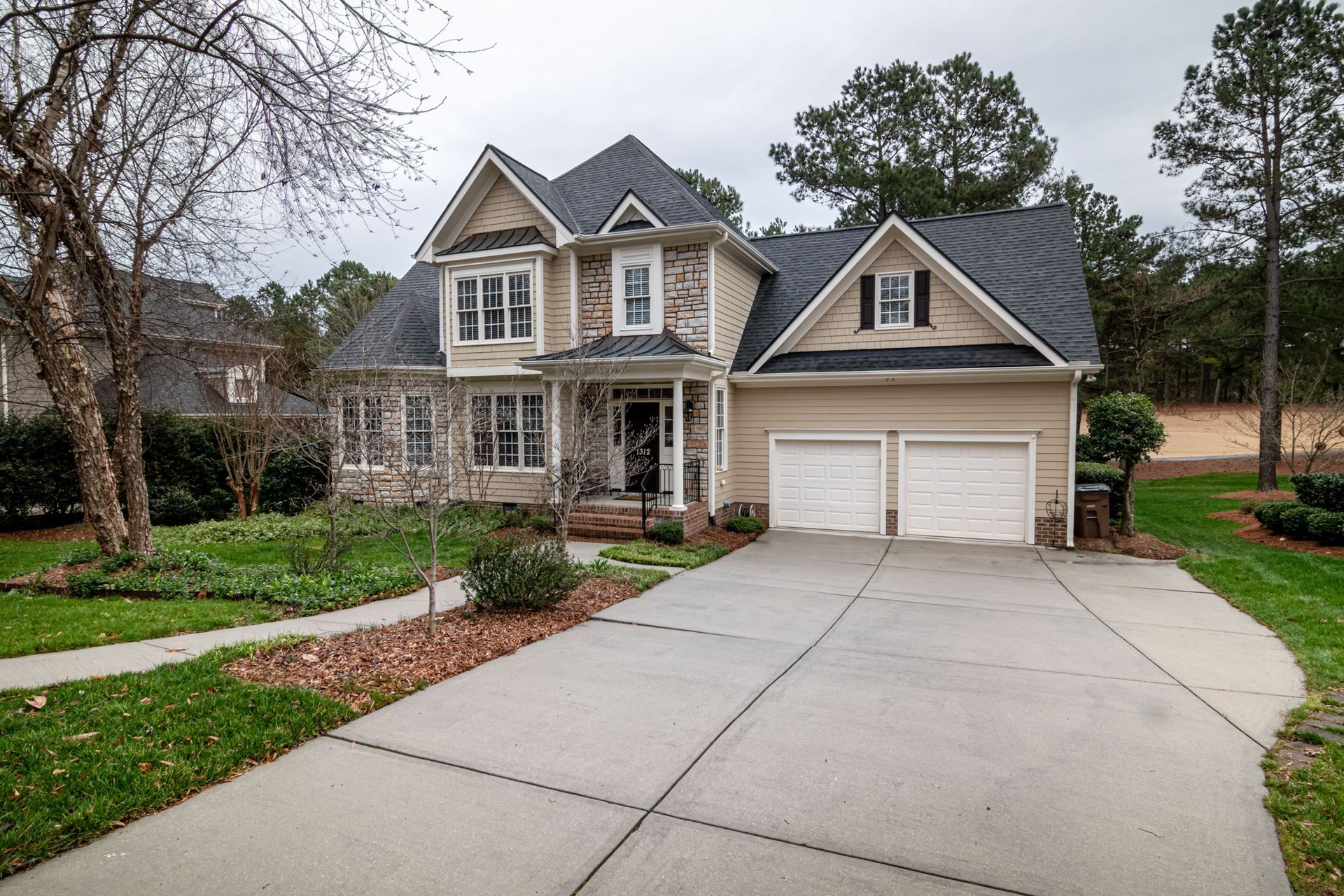
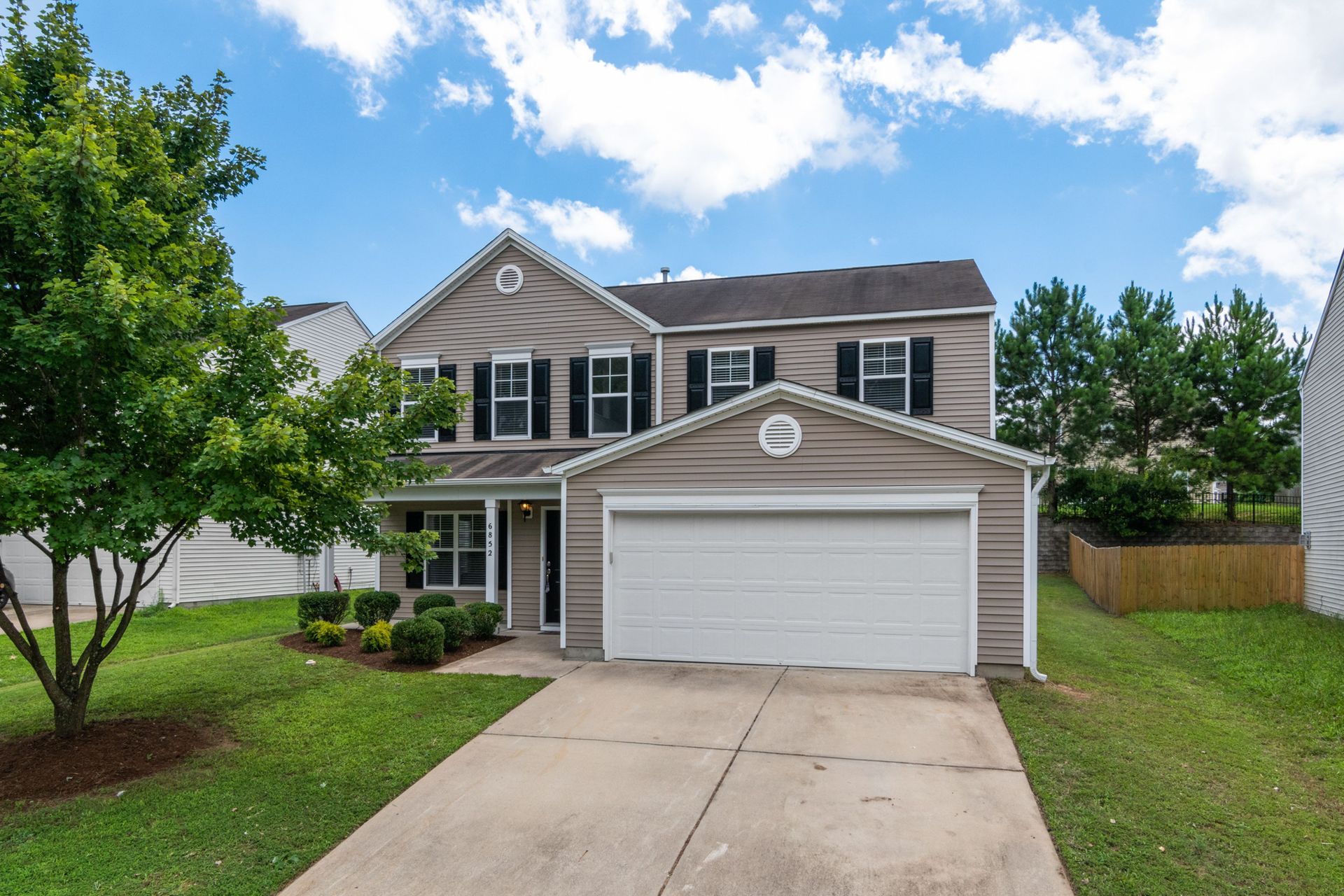
DuPage County has a large stock of older wood-sided homes — Craftsman bungalows in Wheaton, colonial two-stories in Naperville, cedar-clad ranches tucked into the tree lines of Woodridge and Lisle, character homes on the quiet streets near downtown Glen Ellyn. These are high-value properties where exterior condition directly affects appraisal value, and where homeowners have already discovered how quickly a wood exterior can deteriorate when it’s not protected the right way.
A single Rhino Shield application, done correctly, replaces the repainting cycle that most wood-sided homeowners have come to accept as just part of owning a home. The 25-year transferable warranty — which transfers to the next owner if the home sells — means the protection follows the house, not just the homeowner. That’s a meaningful selling point in a market where buyers are paying close attention to deferred maintenance.
If your wood exterior is showing signs of wear — or if you’re simply tired of the cycle — a free estimate takes less than an hour and answers the questions that the next contractor bid won’t. Call (630) 984-4440 or request an estimate online.
Frequently Asked Questions About Wood Exterior Painting & Coatings in DuPage County
Is Rhino Shield ceramic coating good for wood siding?
Yes — and wood is actually one of the surfaces where the performance difference is most dramatic. Because the formula is breathable, it solves the moisture-trapping problem that causes traditional paint to fail on wood. The coating bonds to the wood substrate and flexes with seasonal movement rather than cracking under it.
How do you prepare wood siding before applying a ceramic coating?
Rhino Shield’s process includes pressure washing, scraping and sanding all loose paint, repairing or replacing any damaged wood, sealing gaps with acrylic elastomeric caulk, and applying a comprehensive full prime coat across the entire surface. That last step — full priming, not spot priming — is what sets the system apart from conventional paint jobs and ensures the ceramic topcoat bonds uniformly across the whole project.
How long does Rhino Shield last on wood exteriors?
Rhino Shield backs its wood exterior coating with a 25-year transferable warranty. Traditional paint on Illinois wood exteriors typically needs reapplication every five to seven years, and often sooner on the most exposed surfaces.
Why does paint keep peeling off my wood siding?
The most common cause is moisture. Wood swells and contracts with changing humidity and temperature — traditional paint forms a rigid film that can’t keep up with that movement. When it cracks, moisture gets underneath, and the peeling accelerates from there. A breathable ceramic coating eliminates this problem by allowing moisture vapor to escape rather than trapping it.