Masonite Siding in Chicagoland: Why Replacement Isn't Your Only Option
Category
If your Masonite siding is swelling at a few edges but most boards are still firm, you probably don't need a full tear-off. Hardboard fails where water gets past the coating, which is usually the bottom edges, butt joints and nail heads. Replace the soft boards, seal what's left, and a thick, flexible coating keeps the water out for the long haul.
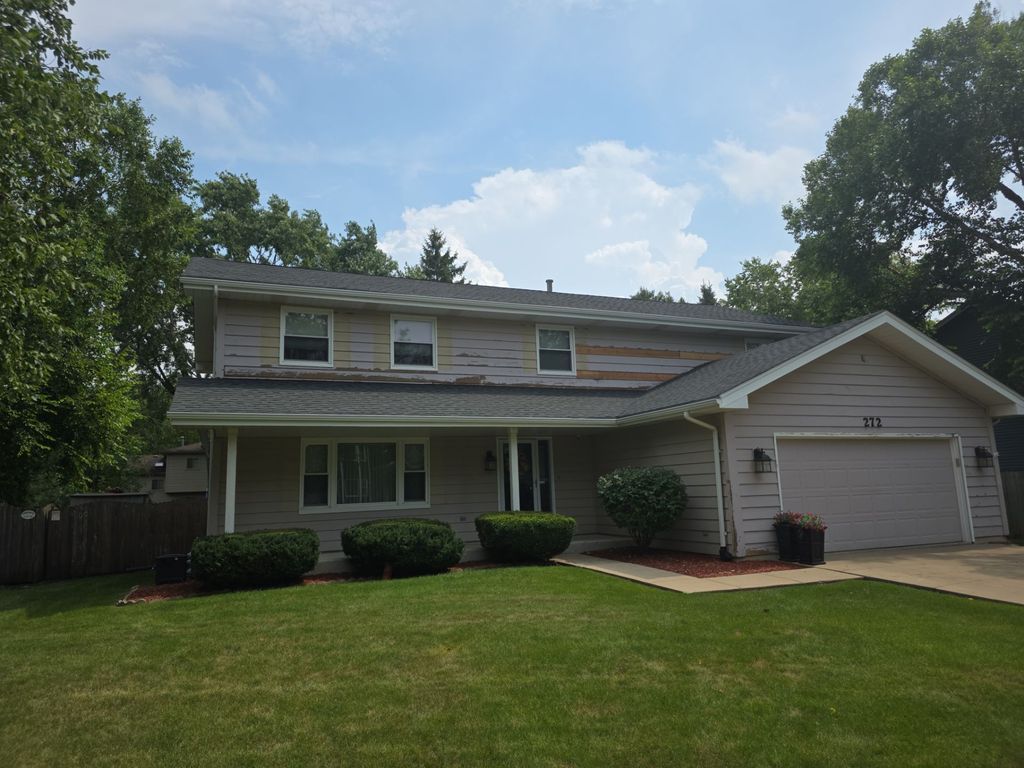
We get the call a lot. A home inspector or a siding salesman has walked the house, poked at a swollen corner board, and said the words "Masonite, it all has to go." Sometimes that's true. Often it isn't, and the difference is worth thousands.
What Is Masonite Siding, Exactly?
Masonite is a brand name that became shorthand for hardboard siding. It's made from wood fibers pressed into boards under heat and pressure, held together with resins, and primed at the factory. From the 1970s into the 1990s it went up on a huge number of homes, including plenty of split-levels, ranches and early subdivision builds across DuPage, Kane and the northwest suburbs.
From the street it passes for wood lap siding. You'll often see a faux wood-grain texture pressed into the face. Look at the bottom edge of a board, though, and you'll see something that doesn't look like solid wood at all: a dense, fibrous core, a bit like thick cardboard.
That core is the whole story. Solid wood sheds water reasonably well. Hardboard drinks it.
Why Hardboard Fails, and Where It Fails First
Hardboard is fine as long as it stays sealed. The moment the coating breaks, water wicks into the fibers, they swell, and a board that swells doesn't shrink back. Keep that cycle going through a few Chicago winters and the edge goes soft, then flakes, then rots.
The failures show up in predictable places:
- Bottom drip edges , where rain runs off each course and sits.
- Butt joints between board ends, especially where the caulk has dried and pulled away.
- Nail heads that were overdriven during install and broke the factory surface.
- The lowest courses near grade, mulch beds, downspouts and sprinkler heads.
This wasn't a rare problem. Swelling, buckling and rot in hardboard siding drove major litigation in the 1990s. One federal case describes siding on a Florida development that was "deteriorating by rotting, buckling, and swelling" within a few years of construction. Chicagoland's freeze-thaw cycle is, if anything, harder on the material than Florida humidity, because water that gets into the fibers freezes and expands before it can dry out.
The Screwdriver Test
You don't need a contractor to get a first read. Take a flat screwdriver and walk the house, paying most attention to the north side and anywhere water concentrates.
Press the tip into the bottom edge of a dozen boards. A sound board resists. A failed board lets the tip sink in, sometimes with barely any pressure, and you may see the edge fan out like wet paper.
What you'll usually find is a mix. Most of the house is firm, with a handful of bad boards clustered in the same wet spots. That pattern is good news. It means the problem is local, and local problems can be fixed locally.
When Coating Makes Sense (and When It Doesn't)
Hardboard was designed to be painted. A continuous, intact coating is exactly what the manufacturers expected to protect it. The trouble is that standard exterior latex goes on thin, cracks at the joints within a few seasons, and puts you right back into a repaint every 5 to 7 years. On hardboard, each of those cracks is a new place for water to get in.
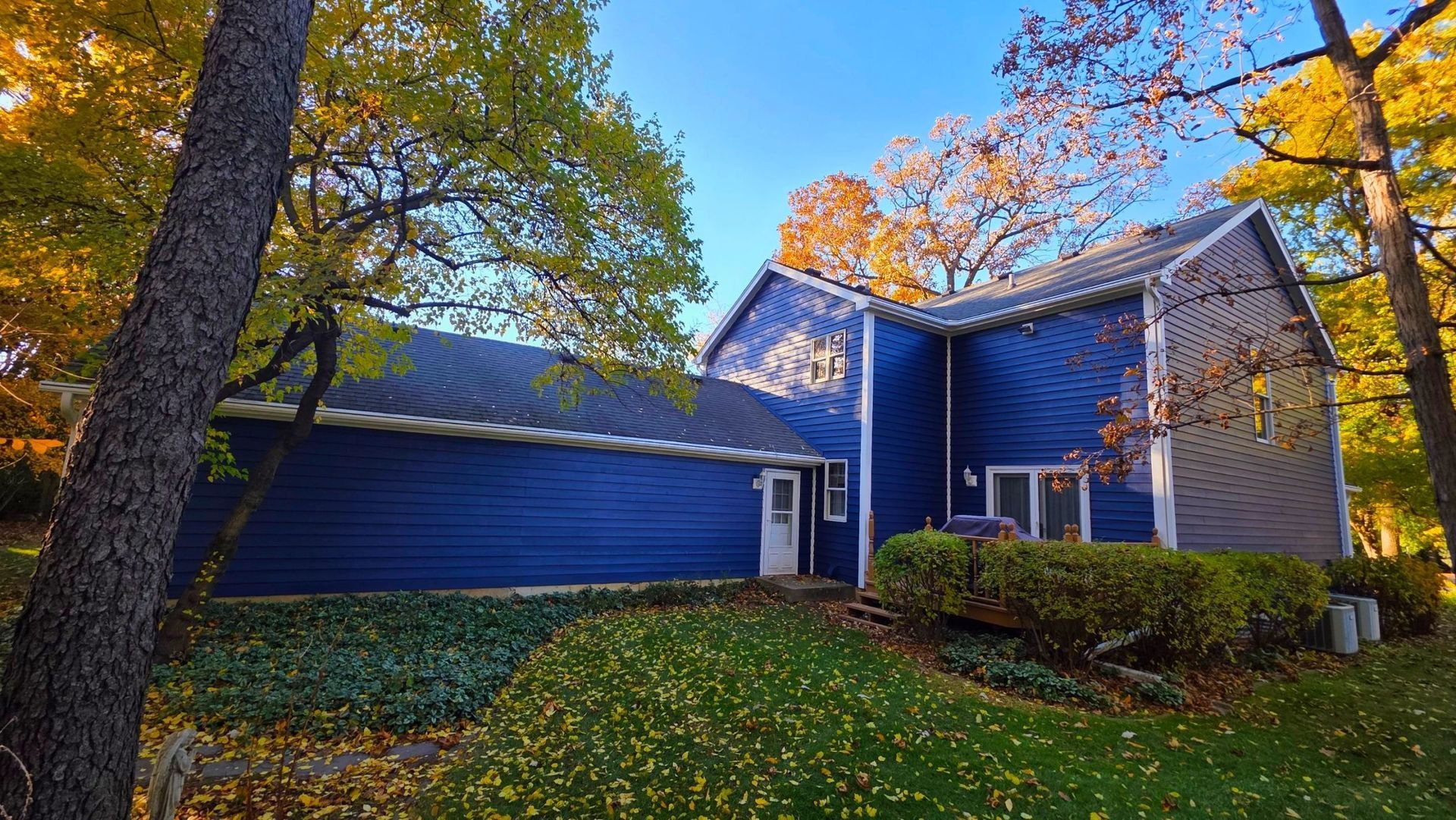
That's where a coating system earns its keep. The Rhino Shield ceramic topcoat goes on at eight to ten times the film thickness of conventional paint, at 67% solids by volume, and it stays flexible as the boards move with the seasons. It's applied as a multi-coat system over a primer matched to the substrate, after every cut edge, joint and nail head has been sealed.
Coating is the right call when:
- Most boards pass the screwdriver test.
- The damage is concentrated in a few predictable areas.
- There's no sign of moisture trouble in the wall behind the siding.
Replacement is the honest recommendation when soft boards are scattered across every elevation, when the siding is visibly wavy across large sections, or when there's rot in the sheathing underneath. We'll say so if that's what we find.
There's also a middle path people don't hear about often: replace the failed boards with a modern engineered product, then coat the whole house so the new and old boards match and are protected the same way. We cover coating engineered and composite siding on our LP and engineered siding page.
What the Prep Has to Include
On Masonite, prep decides whether the job lasts. A proper scope covers:
- Probing every elevation and marking each board that needs replacing.
- Replacing those boards and priming all six sides of the new ones.
- Sealing exposed bottom edges and resetting or sealing proud or sunken nail heads.
- Recaulking butt joints and trim with a flexible elastomeric caulk.
- Washing off chalk and mildew so the primer bonds to the board, not to dirt.
If an estimate for coating your hardboard doesn't mention board replacement or edge sealing at all, ask why. Nobody can promise a coating will hold over swollen fibers.
Questions to Ask Before You Sign for New Siding
- How many boards actually failed, and where are they?
- Is there any damage to the sheathing, or only to the siding?
- What would it cost to replace just the failed boards?
- If I coat instead, what warranty comes with it, and does it transfer if I sell?
That last question matters more than it sounds. Rhino Shield comes with a 25-year transferable warranty, which is a real selling point on a home that a buyer's inspector will otherwise flag for "Masonite siding."
If you're not sure which side of the line your house is on, we're glad to walk it with you and give you a straight answer. You can see all the siding types we coat on our surfaces page.
(630) 984-4440 | Request a free estimate online