Aluminum siding is often marketed as a “lifetime” housing material, but homeowners quickly discover its Achilles’ heel: oxidation . Over time, the environment breaks down the factory finish, leaving behind a white, powdery residue known as chalk.
If you are thinking about refreshing your aluminum siding with a standard coat of exterior paint, proceed with caution. Aluminum is one of the trickiest surfaces to coat, and the “cheap” route often leads to a peeling mess within just a few seasons.
The “Chalk” Trap: Why Adhesion Fails
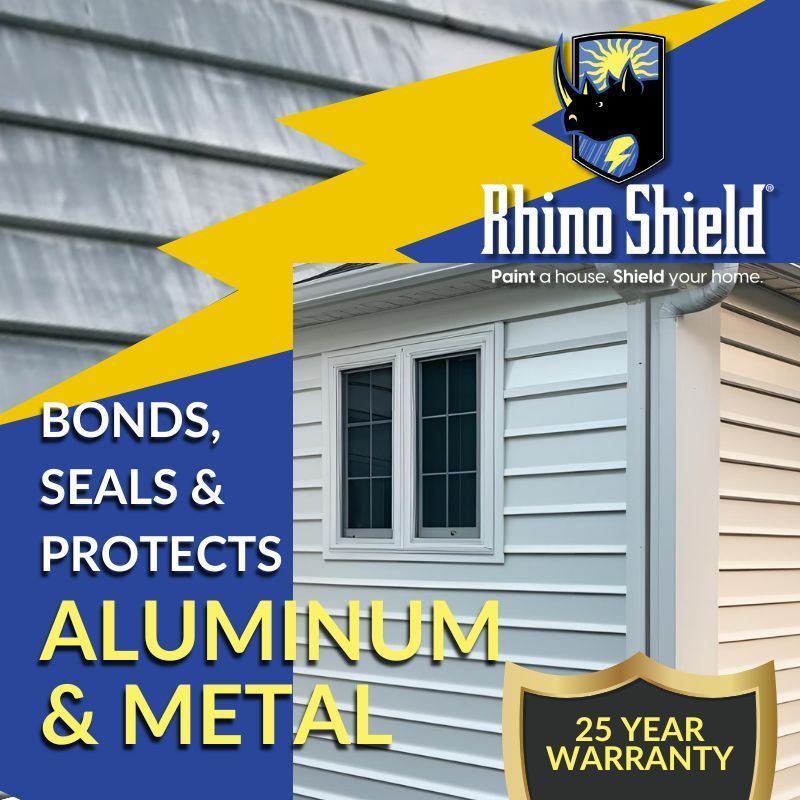 The biggest reason aluminum paint jobs fail is the invisible barrier of oxidation. You can’t simply paint over it. If you apply traditional latex paint over chalky residue, the paint bonds to the loose powder rather than the metal itself. As soon as the temperature shifts, the paint sheet-peels right off.
Achieving a bondable surface requires an exhausting decontamination process. Every square inch of the home must be scrubbed until a clean rag shows zero white residue. Because aluminum is non-porous, there is no “tooth” for the paint to grab onto; if the surface isn’t clinically clean and chemically prepared, the project is doomed before it starts.
The Precision Problem: Smooth Surfaces Show Every Flaw
Unlike wood or stucco, which have natural textures that hide imperfections, aluminum is unforgivingly smooth.
- The Streak Factor: Using a brush or roller on aluminum almost guarantees visible lap marks and “roping.”
- The Expansion Issue: Metal expands and contracts significantly with the sun’s heat. Traditional “brittle” paints cannot stretch with the metal, leading to microscopic cracks that eventually turn into large-scale flaking.
Why Traditional Paint Isn’t Enough
Most exterior paints are designed for porous surfaces like wood. When applied to metal, they are simply too thin. They lack the “build” (thickness) to protect the metal from the elements and the UV resistance to prevent the oxidation cycle from starting all over again. Within 3 to 5 years, most painted aluminum begins to chalk once more.
The Solution: Why Rhino Shield is Built for Metal
To successfully coat aluminum, you need a system that acts more like an armored skin than a layer of paint. Rhino Shield’s elastomeric acrylic ceramic coating system was specifically engineered to solve the problems that metal surfaces present.
Here is why Rhino Shield is the superior choice for painting aluminum and metal buildings:
- Superior Adhesion: We don’t just “wash” the siding; we use specialized cleansers and high-bond primers designed specifically for porous substrates and non-porous substrates like metal.
- Ceramic UV Protection: Unlike latex paint, which breaks down under the sun (causing that chalky powder), our ceramic microspheres reflect UV rays, and better resists oxidation and fading.
- Elasticity: Rhino Shield is incredibly flexible. It is designed to expand and contract with your aluminum siding during the hottest summer days and coldest winter nights without cracking.
- High-Build Finish: Our coating is roughly 8–10 times thicker than traditional paint. This creates a uniform, “factory-fresh” look and lasts for a long time.
Don’t Just Paint Your Aluminum Siding, Protect It
Painting aluminum siding correctly is a labor-intensive, technical process. If you use the wrong materials, you’ll be repeating the job in a few years. By choosing a high-performance system like Rhino Shield, you get a long-lasting solution and peace of mind.
Don’t just paint your home—protect it. If you have a metal home or commercial building, explore our specialized metal coating services and see how we provide a long lasting solution for your siding.