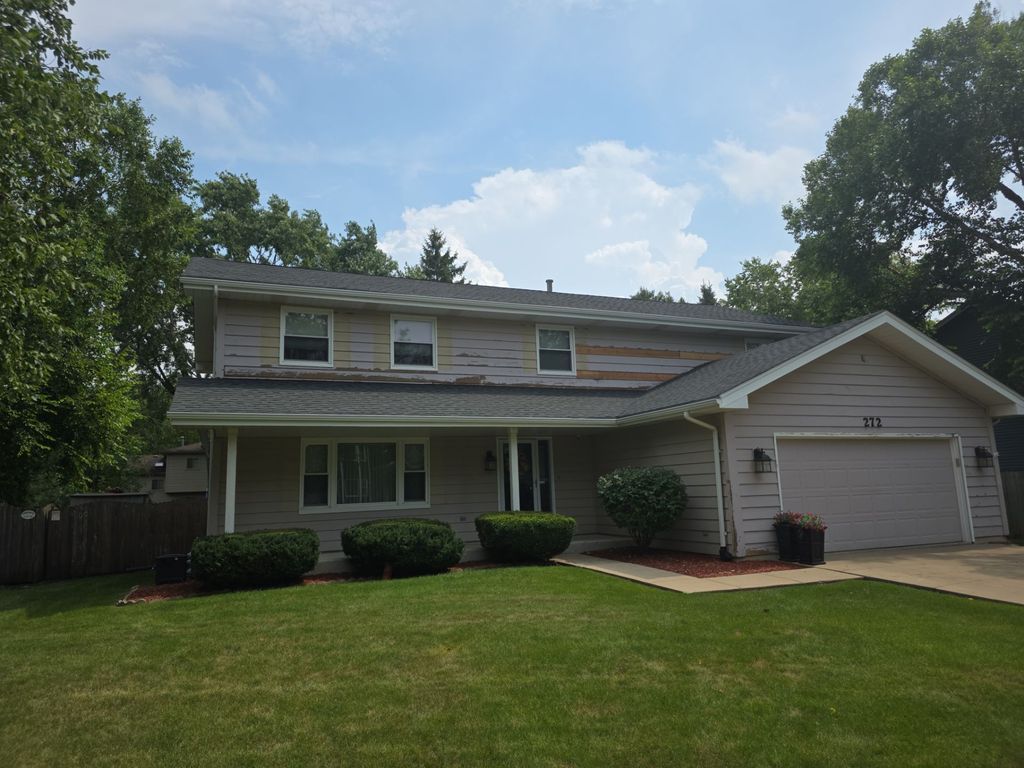
Every February, Chicago's temperature swings from single digits to a 40-degree thaw and back again, sometimes in the same week. That freeze-thaw cycle is exactly what turns a smooth-painted wall into a spiderweb of hairline cracks by spring. Standard paint is rigid. It doesn't move with the substrate underneath it, and when wood, stucco, or siding expands and contracts, the paint film has nowhere to go except apart.
This is week one of Fact Check Friday, a new series where we open up the actual independent lab reports behind Rhino Shield and let the data do the talking instead of the sales copy. First up: elongation and tensile strength, the two numbers that explain why our coating system flexes instead of fractures.
What the Lab Actually Tested
Future Labs, LLC, an independent product testing lab in Madison, Mississippi, ran ASTM D2370/D638 (modified) elongation and tensile strength testing on premade film samples of the Rhino Shield system after the samples had already been weathered for 1,058 hours under UVA QUV exposure — accelerated sun and moisture aging meant to simulate years outdoors. Samples were cut into 6-inch by 1-inch strips and pulled apart at a controlled rate until they failed, with the lab recording both how far the film stretched before breaking (elongation) and how much force it withstood (tensile strength).
The results: the white base coating averaged 538% elongation at 212 psi tensile strength. The deep base tint averaged 550% elongation at 340 psi. In plain terms, the coating film could stretch to more than five times its original length before it broke.
Why 500%+ Elongation Actually Matters
A number like "538% elongation" means nothing until you connect it to what happens on your actual house. Wood siding swells when it absorbs moisture and shrinks as it dries out. Stucco and masonry expand under summer heat and contract when temperatures drop. Every one of those movements puts stress on whatever coating sits on top.
Standard latex paint has almost no give — most conventional exterior paints test well under 100% elongation once they've aged and cured. That's fine on a stable substrate in a mild climate. It's a liability in Chicagoland, where DuPage, Cook, Lake, and Kane County homes deal with some of the widest seasonal temperature swings in the country. When the substrate moves and the paint can't move with it, the paint film cracks. Once it cracks, water gets behind it, and that's when the real damage — rot, mold, peeling — starts.
Rhino Shield is applied as a multi-coat system, not a single layer, which is part of what gives it both the thickness and the elastomeric flexibility to move with your home instead of fighting it. Tensile strength matters here too: it's not enough for a coating to stretch if it tears easily under that stretch. The 212–340 psi range shows the film holds its structural integrity even while flexing.
The Adhesion Side of the Equation
Flexibility only helps if the coating stays bonded to the surface in the first place. DRM Consulting also tested adhesion per ASTM D4541, pulling the coating off wood and concrete substrates to measure the force required. It held at 567 psi on wood and 533 psi on concrete — well above what's needed to keep the system locked to the substrate through years of expansion and contraction.
Why We're Publishing the Raw Numbers
Most exterior painting companies talk about durability in vague terms — "premium," "long-lasting," "built to last." We'd rather show you the signed lab report. Every test in this series comes from an accredited third-party facility, not from Rhino Shield's own marketing department, because a homeowner deciding between a $6,000 paint job and a Rhino Shield system deserves more than a brochure claim.
Want to see the full data set — every test, every lab, every result? We've put it all in one place.
Download the complete Rhino Shield Testing Book (PDF) — every ASTM test result referenced in this series, straight from the independent labs: https://irp.cdn-website.com/ceae3fe7/files/uploaded/RhinoShield_TestingReportDoc_R3-1.pdf
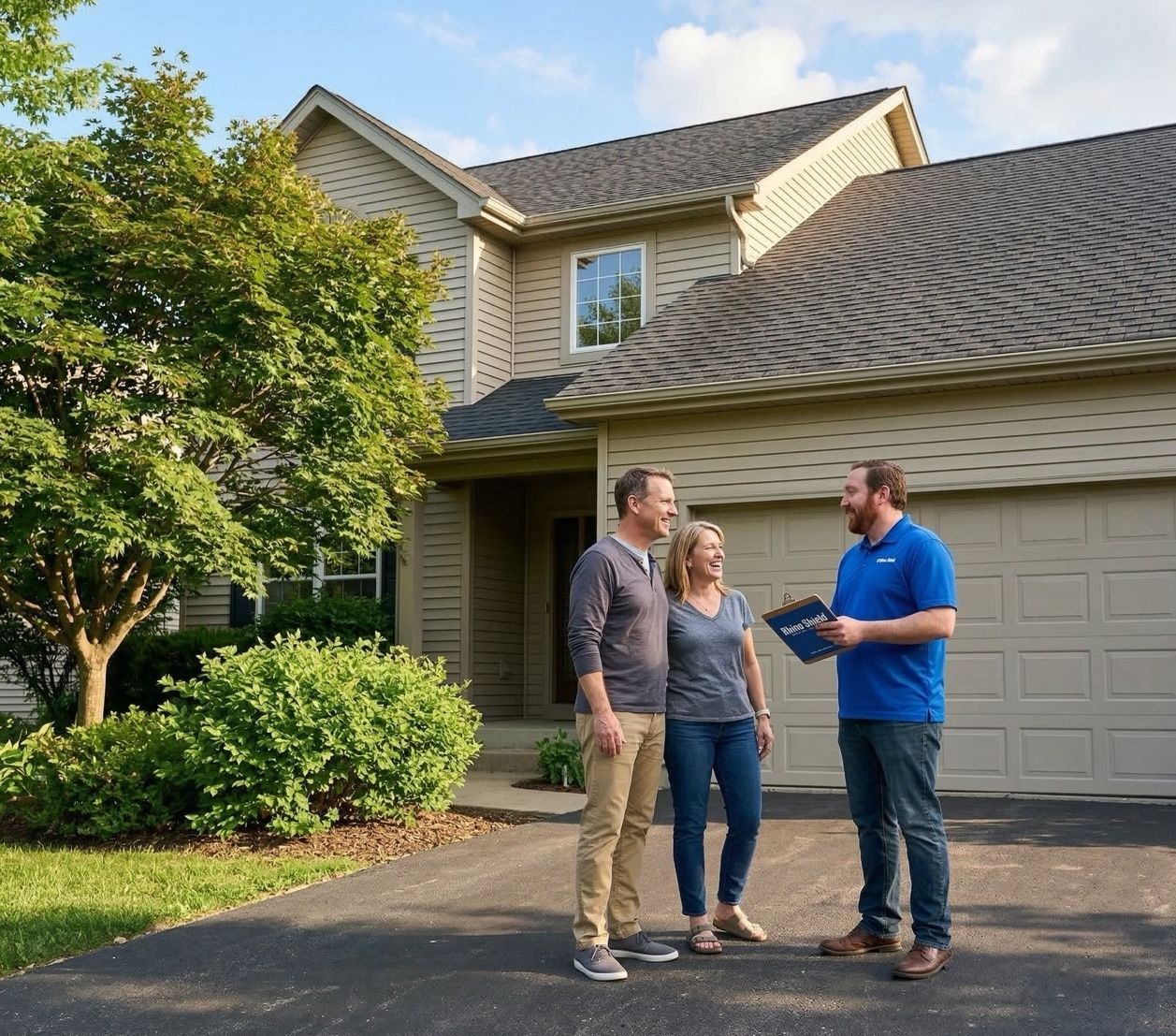
If you're dealing with cracked, peeling paint on a Chicagoland home right now, that's usually a flexibility problem, not just a "needs a fresh coat" problem. Request a free estimate or call us at (630) 984-4440, and we'll show you exactly why your current paint is failing — and what a coating system built to move with your home looks like instead.