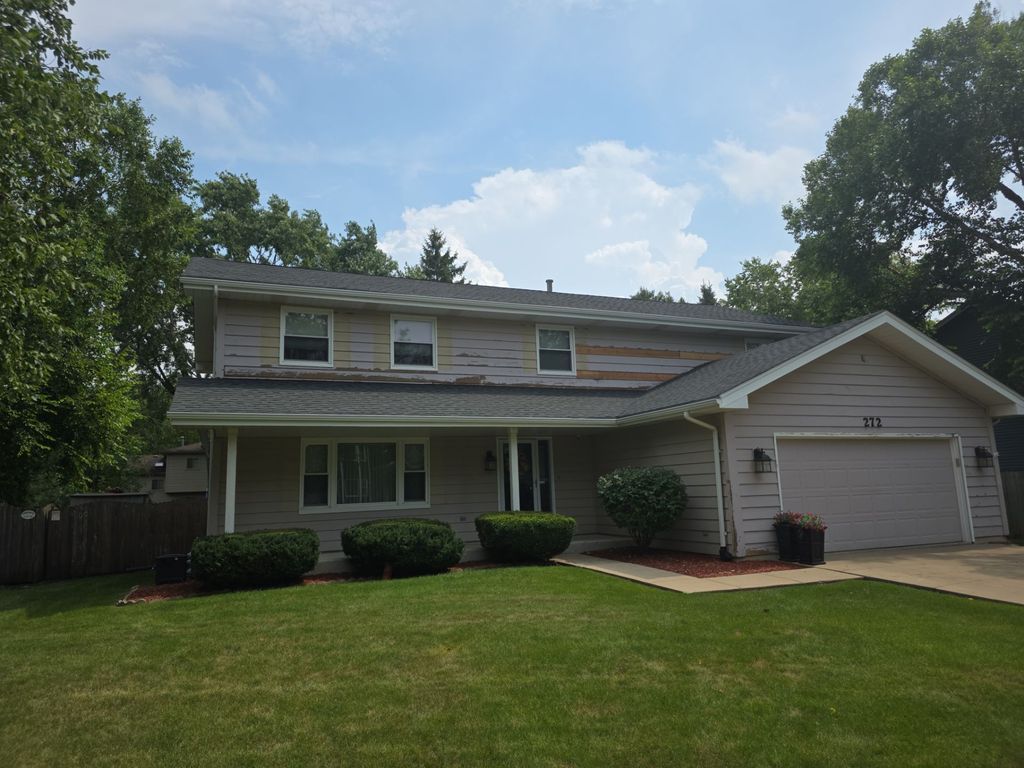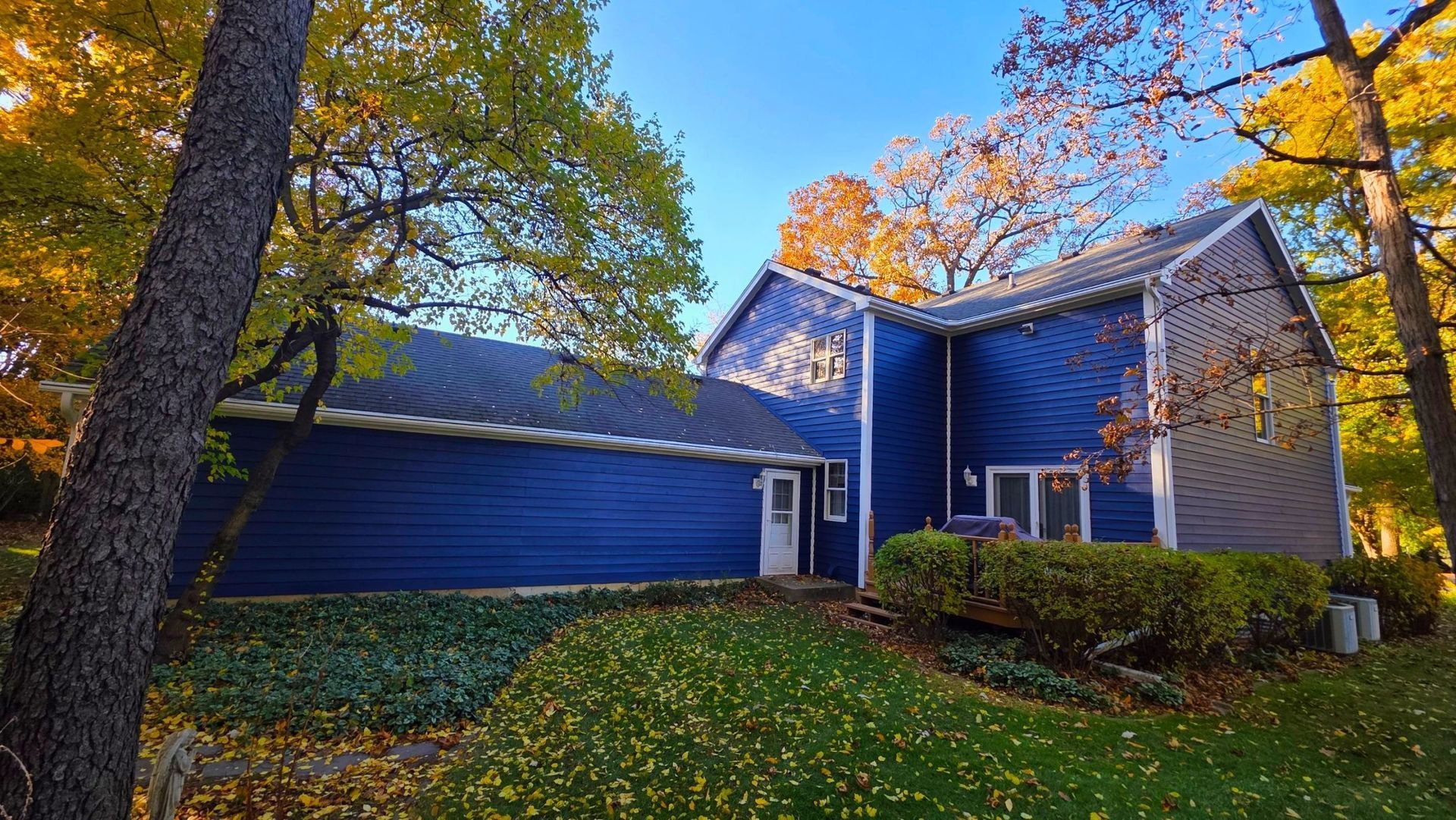
Walk down almost any street in Naperville, Arlington Heights, or Elgin after a wet spring and you'll spot it: those dark streaks running down the north side of a house, usually worst under an overhang or near mature trees where the siding never fully dries out. Homeowners often assume it's dirt. It's usually algae, and sometimes mold, feeding on the surface of the paint itself.
This week's Fact Check Friday looks at the test that measures exactly that — how a coating holds up when it's deliberately exposed to the organisms that cause it.
What the Lab Actually Tested
The MicroStar Lab in Crystal Lake, Illinois — an accredited testing facility just outside the Chicago metro — ran ASTM D5590, the standard test method for determining resistance of paint films to fungal defacement using an accelerated four-week agar plate assay. Two versions of the coating were tested: one leached (pre-rinsed to simulate weathering) and one not leached, both prepared as 42mm discs cut from coated panels.
Each disc was placed on an agar plate and sprayed with live spore suspensions of three organisms known for defacing exterior surfaces: Aspergillus niger , Talaromyces pinophilus , and Aureobasidium pullulans — the last of which is the specific organism responsible for the black streaking most homeowners notice first. The samples were incubated at 28°C and 85%+ relative humidity for 28 days, with growth rated weekly on a 0-to-4 scale, where 0 means no growth at all and 4 means heavy growth covering more than 60% of the surface.
The filter paper positive control — included specifically to confirm the test conditions were aggressive enough to support fungal growth — showed copious growth by day 7. The Rhino Shield samples: a rating of 0, No Growth, across all three replicates, all three organisms, all four weeks, on both the leached and not-leached panels.
Why "Zero" Is the Number That Matters
A coating doesn't need to kill mold to pass this kind of test — it just has to refuse to feed it. Many paints, especially cheaper flat finishes, are porous enough that organic material and moisture work their way into the surface, giving algae and mold spores exactly the food and foothold they need. Once that colony establishes itself, pressure washing might knock the visible streaks down, but the spores are still embedded, and the growth comes back within a season or two.
Rhino Shield's ceramic-based formulation creates a denser, less porous surface. Combined with the antimicrobial properties confirmed in this testing, that's why the zone-of-inhibition measurements in the full lab report show the antimicrobial actively pushing back growth at the disc's edge rather than just failing to support it passively.
Why This Matters More in Chicagoland Than You'd Think
Humidity, shade, and mature tree canopy are the three ingredients algae needs, and Chicago's suburbs have all three in abundance. North-facing walls that stay damp longer after rain, homes tucked under oak canopy in older neighborhoods like Elgin or Naperville, and our genuinely humid summers all create ideal growing conditions. A coating that resists this kind of biological growth isn't a luxury feature here — it's the difference between a home that looks freshly painted five years out and one that needs a pressure wash and a mildew treatment every single spring.
Every test in this series comes straight from the accredited lab reports, not marketing copy. Want the complete picture?
Download the full Rhino Shield Testing Book (PDF) — every ASTM result in this series, direct from the independent labs: https://irp.cdn-website.com/ceae3fe7/files/uploaded/RhinoShield_TestingReportDoc_R3-1.pdf
If you're already seeing streaking or dark patches on your siding, that's worth a second look before your next repaint. Request a free estimate or call (630) 984-4440 and we'll walk your exterior with you.